- Selected works
- Go East - Go West
- Full Metal Jacket
- Cults of Personality
- Untitled brulotti
- In Guns We Trust
- Ellinikó
- Art deco houses of Athens
- Me, myself and I
- Love&Money
- Logical revolt
- We are all made of Stars
- Grey, grey, grey is the colour of the day
- Majestic People in Outstanding Places
- 7 aphorisms
- Divine Pleasures
- Love is an Elephant
- Dress and sofa
- Performances
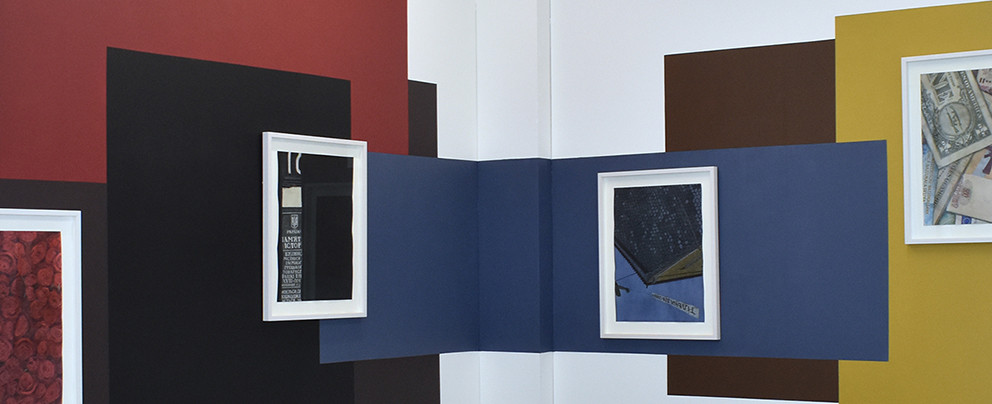
Go East – Go West
Museum of Impossible Forms, Helsinki, Finland
4.9.-11.10.2026
Go East – Go West (2020–2023), is a seven-part series of watercolour paintings, shown as a site-responsive installation. Developed in response to Russia’s war against Ukraine, the series considers how geopolitical events enter personal consciousness, becoming entangled with memory, loss, cultural imagery, and lived experience.
Go East – Go West approaches conflict and warfare through a series of subjective and associative fragments. Each painting takes a different point of departure, drawing together images encountered through news media with personal references, architectural details, symbolic elements, and imagined scenarios. The series began its formation around 2019, having followed developments since Russia’s illegal annexation of Crimea in 2014, through its full-scale invasion of Ukraine in February 2022 and the devastating war that continues today. As the work evolved, what the artist encountered through mediated images became increasingly difficult to separate from episodes and environments within his own life. The paintings emerge from this unstable proximity: between what is witnessed from elsewhere and what is recognised through experience; between translocal histories and intimate forms of remembrance.
This tension also raises questions around the possibility—and limits—of approaching a conflict from a distance. The series remains with the complicated processes of identification through which the impact of foreign wars may nevertheless produce recognition, association, empathy, implication, and mobilisation across geographies. Cultural and architectural correspondences become points through which the artist reflects on how images travel, how memories attach themselves to political events, and how violence and war can disturb the perceived boundaries between elsewhere and here.
Across the seven works, painting operates as a space in which heterogeneous materials can coexist without being reconciled: personal grief and collective trauma, fact and fiction, political imagery and private memory, destruction and the desire to imagine otherwise. The works move between the causes and consequences of conflict and the more difficult question of what forms of resolution can still be pictured within conditions structured by violence.
Although the series emerged from the specific context of Ukraine, the artist understands it as opening onto a broader reflection on war and its recurrent presence in contemporary life. At a moment when the war in Ukraine continues alongside numerous other sites of military occupation, displacement, destruction, and genocide Go East – Go West asks what painting can do in relation to events whose scale exceeds individual experience. Rather than offering explanation, the works inhabit the uncertain terrain between witnessing and distance, using colour, repetition, symbolism, and personal narrative to consider how political violence is perceived, internalised, and remembered.
The series was realised with the support of the Finnish Cultural Foundation.
The artist extends special thanks to Konsta Balomenos, Oxana Chelysheva, Michail Galanakis, and Katerina Karaiskou for their support in the realisation of the work.
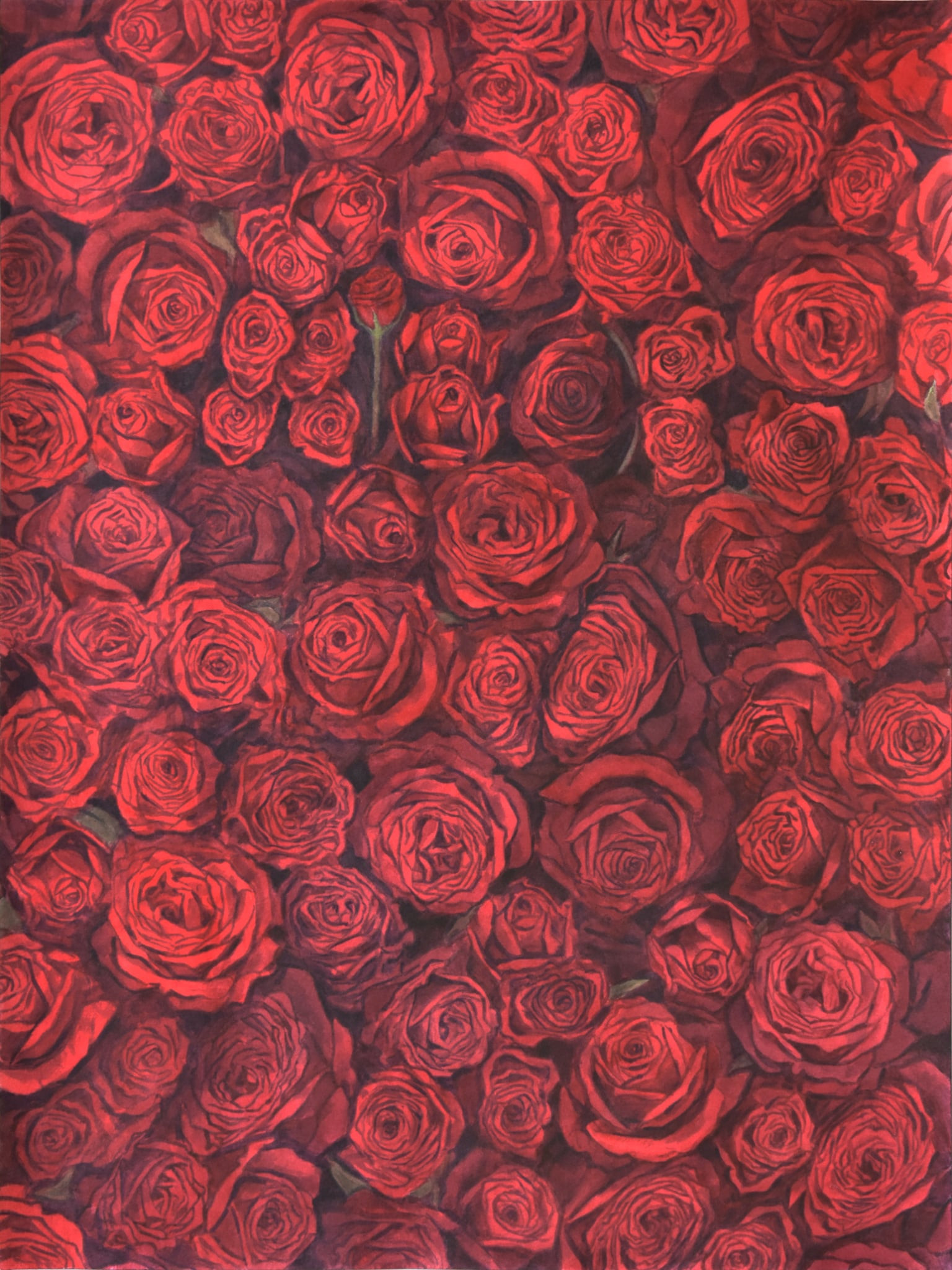
The work refers to the Minsk agreements, negotiated in 2014 and 2015 in an attempt to end the war in the Donbass region of eastern Ukraine. Roses appear as an image of an ideal resolution, but also refer to a familiar decorative motif found on consumer goods across Russia, Belarus, and Ukraine, particularly during the 1970s and 1980s.
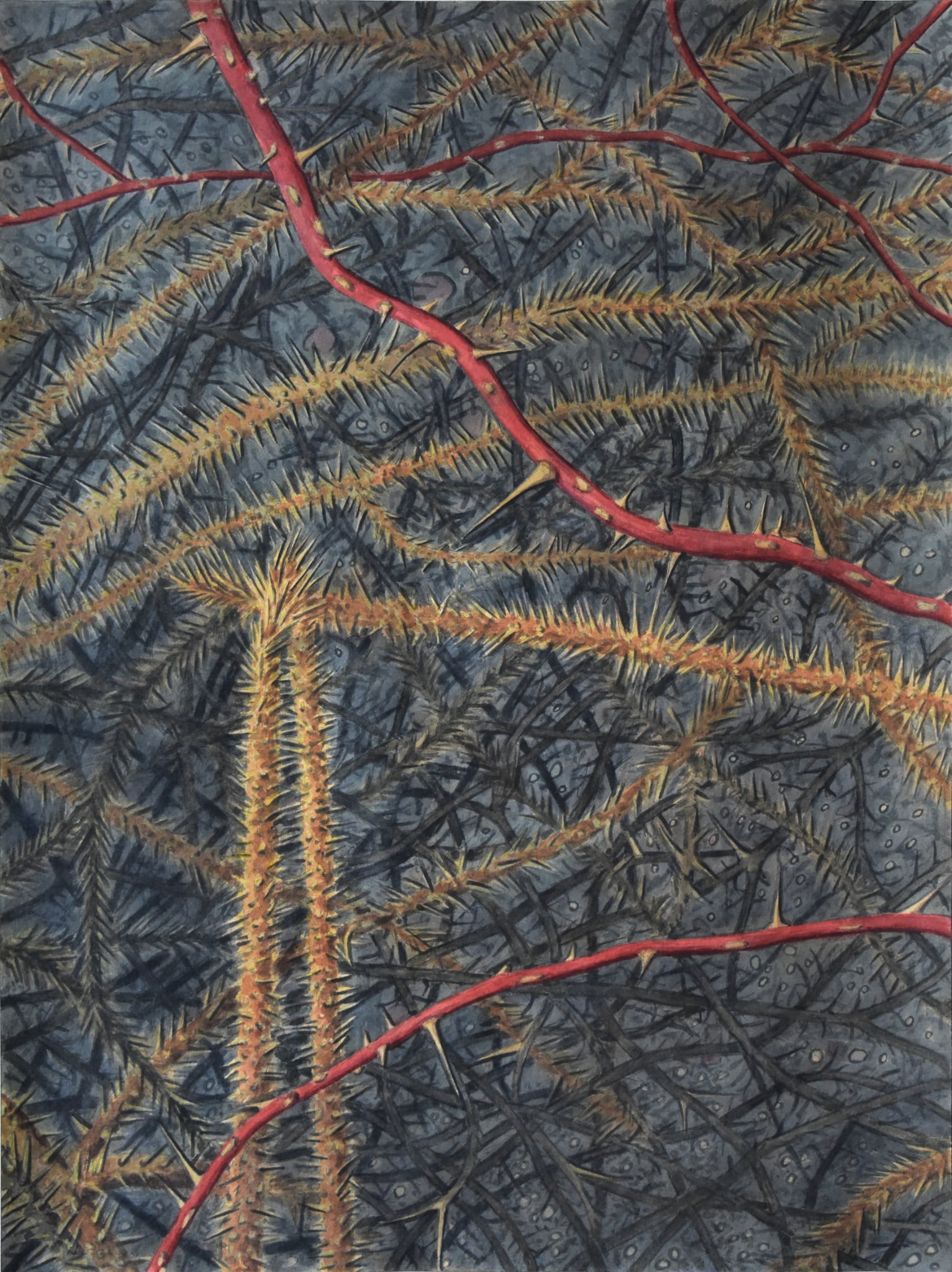
In contrast to the ideal represented by the roses in The Minsk Agreement, this work turns to the complexity of the conflict itself. Layers of small and large spikes become entangled into a structure in which individual elements can no longer be easily separated from one another.
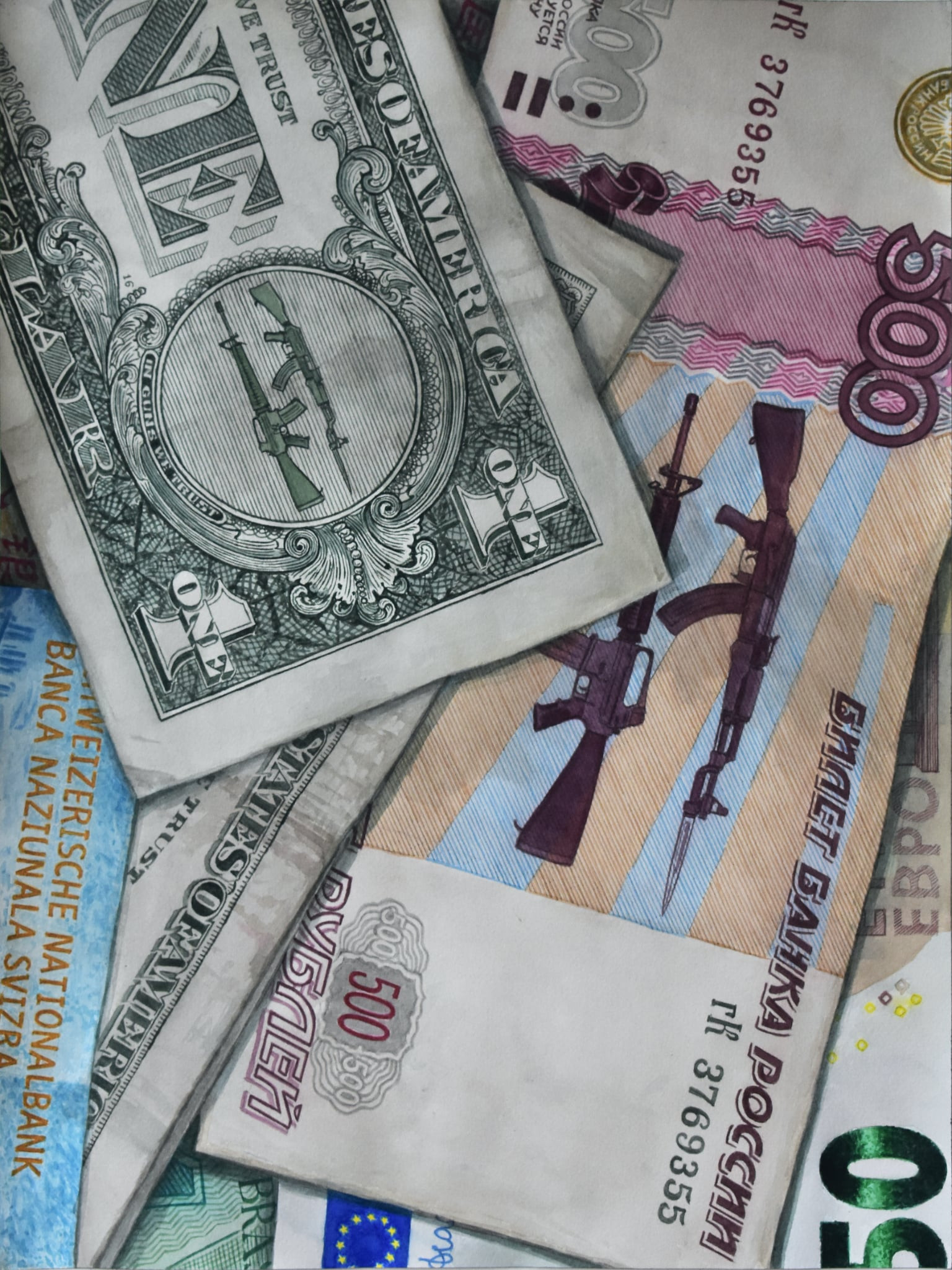
The work replaces symbols and imagery associated with money with guns. It brings together references to Russian rubles, US dollars, Swiss francs, euros, Chinese yuan, and Brazilian Reals, drawing a direct connection between currencies, economic power, and the circulation of weapons.
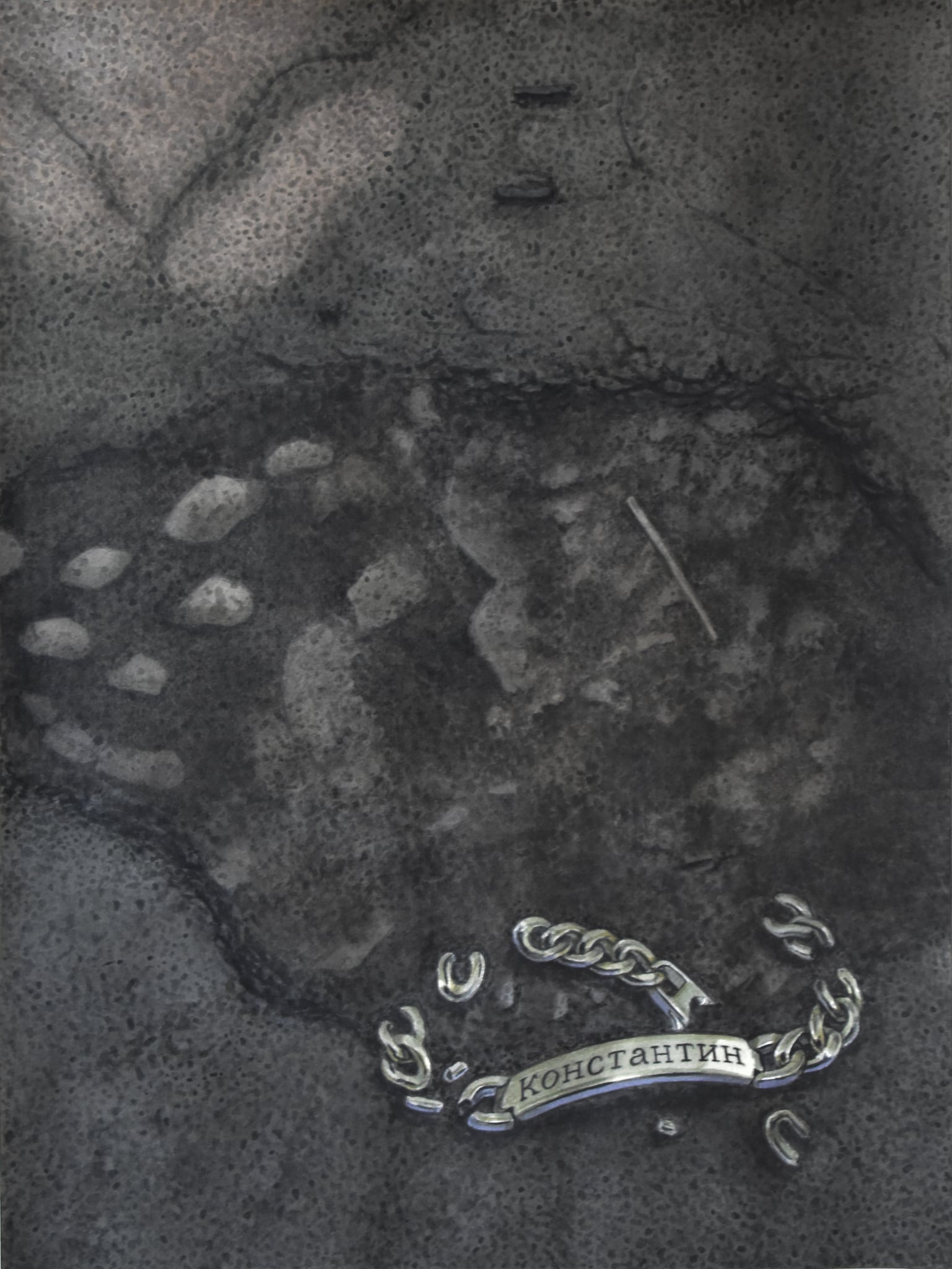
The work takes its title from the name of the artist’s child. It depicts a silver name bracelet, a familiar object in Greece and other Orthodox contexts, imagined here as the remnant of a bombing in which a child has been killed. By using his own child’s name, he brings the distant reality of war into an intimate and deliberately difficult proximity, confronting the limits of empathy when violence is experienced from elsewhere.
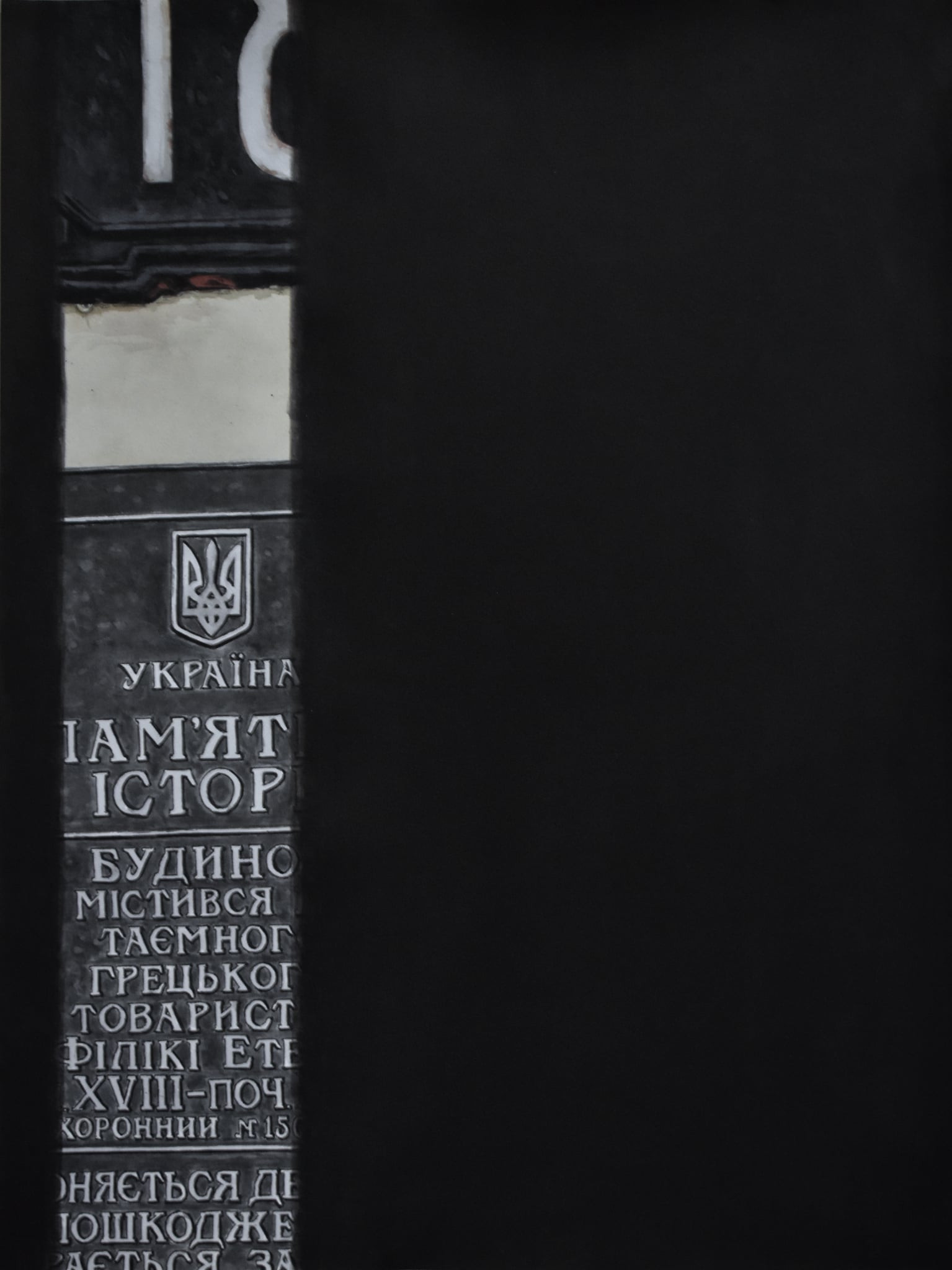
The work depicts a small detail from the building in Odessa, Ukraine, where Filiki Eteria (Society of Friends) was founded in 1814. A secret revolutionary organisation formed to overthrow Ottoman rule and establish an independent Greek state, the Society played a central role in initiating the Greek War of Independence in 1821.
In December 2021, a close friend of the artist was diagnosed with brain cancer, which caused a partial loss of vision: he could see only a narrow field in front of him, while his right side remained in the dark. As the war intensified, Balomenos found himself thinking about this experience in relation to people facing illness while also having to flee their homes under bombardment in Odessa.
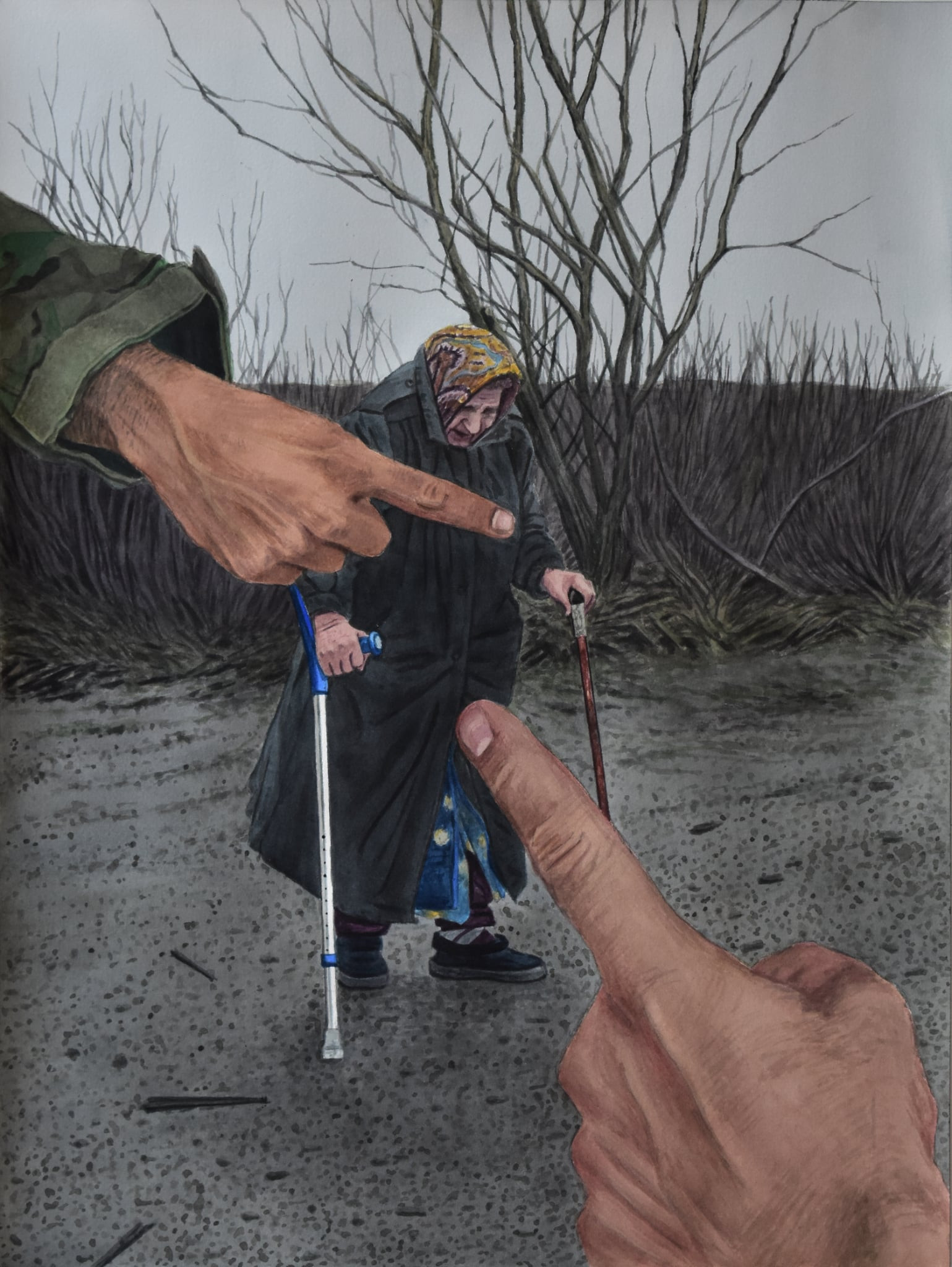
An elderly woman stands surrounded by the hands of soldiers pointing in different directions. East, west, north or south become competing instructions, leaving her to determine where, and whether, there is a direction towards safety.
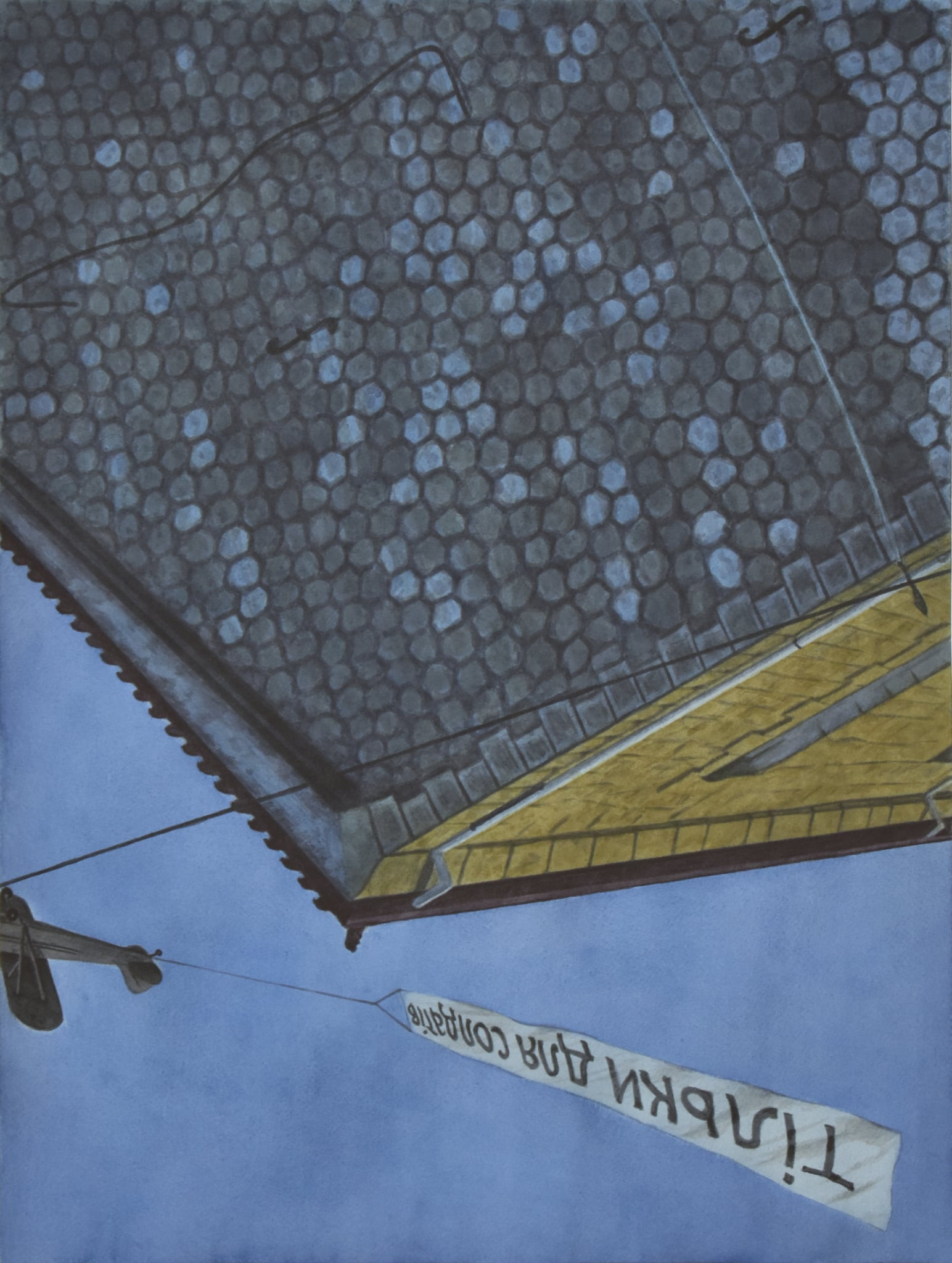
The Ukrainian words “For soldiers only” float above a stone-built school. While researching the war, Balomenos became interested in the visual similarities between public buildings found in villages across parts of Eastern Europe. The school refers to the transformation of civilian infrastructure under conditions of war, when spaces associated with everyday life become entangled with military use or targeted by the military .